Helium Tank Sizes & Balloon Count Guide
Last updated: December 20, 2025
Not sure what size helium tank you need? Use this guide to match common tank sizes to approximate balloon counts, so you don’t end up short on helium or massively overbuying.
These numbers are estimates based on a standard 11–12" latex balloon using about 0.48 ft³ of helium. Real-world results vary with pressure, temperature, regulator, balloon quality, and waste. Always ask your supplier to confirm what they expect from their cylinders.
Not sure whether you’re using a disposable kit or a refillable cylinder? Disposable vs refillable tanks explains what you’re working with and when rental/exchange makes more sense.
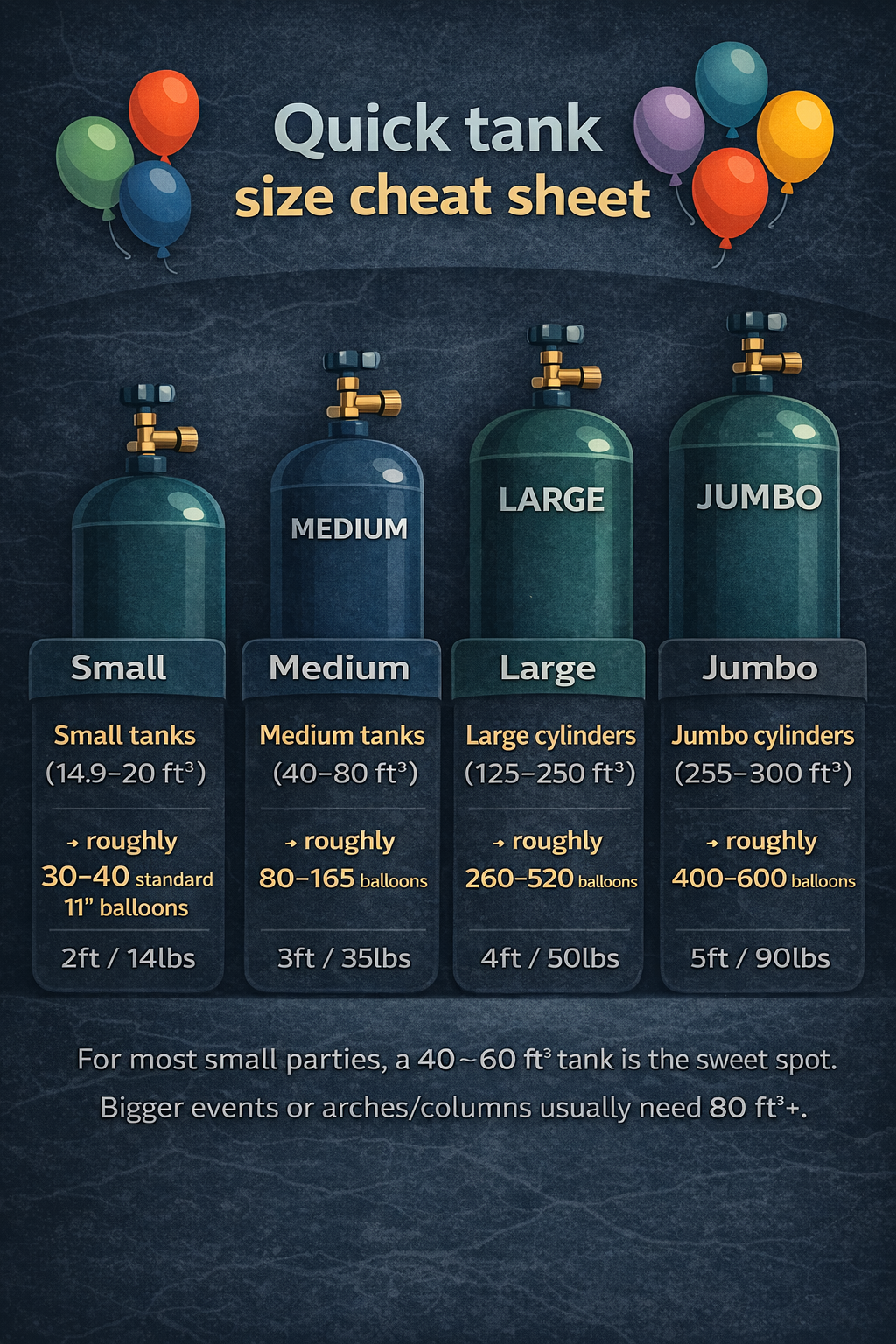
Quick tank size cheat sheet
- Small tanks (14.9–20 ft³) → roughly 30–40 standard 11" balloons.
- Medium tanks (40–80 ft³) → roughly 80–165 balloons.
- Large cylinders (125–250 ft³) → roughly 260–520 balloons.
For most small parties, a 40–60 ft³ tank is the sweet spot. Bigger events or arches/columns usually need 80 ft³+.
Quick answers
- Small disposable kits are fine for a handful of balloons, not a gym or festival.
- Rental / industrial cylinders are better for larger events or repeated use.
- Plan using ranges, then round up a bit so you don’t run out mid-event.
- Heat, cheap balloons, and overfilling all cut float time compared to “perfect” charts.
Common helium tank sizes & approx. balloon counts
These are typical refillable cylinder sizes you’ll see at welding / industrial gas suppliers and rental shops. Balloon counts assume an 11" latex balloon (~0.48 ft³) filled to a normal teardrop shape (not underfilled and not stretched to bursting).
| Tank label / size | Capacity (ft³) | Approx. 11" balloons | Good for | Notes |
|---|---|---|---|---|
| Small party kit / mini | ~8–14.9 ft³ | ~15–30 | Tiny home parties | Disposable cylinders; most shops will not refill these. |
| “14.9” disposable kit | 14.9 ft³ | ≈ 30 | Small birthdays / baby showers | Convenient, but high cost per balloon. |
| 20 ft³ portable | 20 ft³ | ≈ 40 | Small parties, school events | Lightweight; some suppliers rent these for weekend use. |
| 40 ft³ (“B” size) | 40 ft³ | ≈ 80–85 | Kids parties, church events, small arches | Good step up from party kits without being huge. |
| 60 ft³ (“C” size) | 60 ft³ | ≈ 120–125 | Medium events, school dances | Nice middle ground; common rental size. |
| 80 ft³ (“D” size) | 80 ft³ | ≈ 160–170 | Larger parties, basic balloon decor | Popular with decorators for smaller installs. |
| 125 ft³ (“E” size) | 125 ft³ | ≈ 260 | Arches, columns, school or corporate events | Better suited to frequent or professional use. |
| 150 ft³ | 150 ft³ | ≈ 310–315 | Large events, fair booths | Heavier cylinder; usually stays on a cart. |
| 200–250 ft³ (“K” size) | 200–250 ft³ | ≈ 415–520 | Big installs, festivals, decorators | Tall industrial cylinders; not fun to move without a dolly. |
Planning numbers, not guarantees. If your event absolutely can’t run out of balloons, add a safety margin or step up one tank size, and confirm expected counts with your supplier.
Helium per balloon size
If you’re mixing balloon sizes, you can use these rough helium volumes to do your own math. Multiply by how many of each size you’re inflating.
| Balloon size | Approx. helium (ft³) | Example use |
|---|---|---|
| 9" latex | ~0.34 ft³ | Small bouquets, filler balloons |
| 11" latex | ~0.48 ft³ | Standard party balloon size (most charts use this) |
| 12" latex | ~0.52 ft³ | Slightly larger look without huge extra helium |
| 16" latex | ~1.50 ft³ | Big focal balloons, arches, statement pieces |
Foil / Mylar balloons vary a lot by shape. Most manufacturers print a recommended tank size or helium volume on the packaging or product page.
How to choose the right size helium tank
1. Count your balloons first
Make a quick list of how many balloons you’re planning: centerpieces, bouquets, arches, columns, ceiling balloons, and “extras if some pop.”
2. Match to a tank size
Use the tables above. As a rough guide: 40–60 ft³ works for most birthday parties, while 80+ ft³ is better for arches, columns, or big rooms.
3. Add a buffer
Add 10–20% extra for popped balloons, mistakes, and half-filled practice attempts. Under-buying is almost always more annoying than having a little extra.
Refill vs exchange for different tank sizes
Most welding / industrial gas suppliers handle helium in two ways: refill (they top off your exact tank) or exchange (you swap for a full one). Not every size is handled both ways.
- Smaller cylinders (20–80 ft³): often available as short-term rentals for parties.
- Larger cylinders (125–250 ft³): more likely on an exchange program or long-term account.
- Disposable kits: usually not refillable. Most shops will refuse to fill them.
When in doubt, call ahead and ask: “Do you refill or exchange helium cylinders in the [size] range, and what’s available right now?”
Float time, temperature & waste
The same tank can feel generous or stingy depending on how you treat it:
- Heat & sun: hot rooms and direct sun shorten float time.
- Cheap latex: leaks helium faster than higher-quality balloons.
- Overfilling: uses more gas per balloon and causes more popping.
- Underfilling: saves helium but can look sad and under-float.
For important events, inflate as close to event time as practical, use better balloons, and keep tanks and inflated balloons out of heat as much as you can.
Call a supplier before you drive
A five-minute call can save a wasted trip or a half-decorated gym. Use this checklist when you call:
- “Do you offer helium tank rental, exchange, or refill for the public?”
- “What tank sizes do you have available right now?”
- “Roughly how many 11–12" balloons does that size usually cover?”
- “Do you include a balloon inflator nozzle or regulator?”
- “What’s the price and deposit, and how long is the rental period?”
- “Do you accept customer-owned tanks if I bring one?” (if relevant)
Safety notes for any tank size
Helium is inert, but pressurized cylinders are not toys. Treat every size with respect:
- Keep cylinders upright and secured so they can’t roll or tip.
- Don’t leave tanks in hot vehicles or direct sun.
- Use proper caps, chains or straps when moving or storing cylinders.
- Do not refill disposable kits.
- Do not inhale helium from tanks or balloons; it can displace oxygen.
- Follow venue rules for schools, churches, and public buildings.
If you’re unsure, ask your supplier how they recommend securing, transporting, and storing their cylinders.
Next steps
If you know roughly how many balloons you need, you have enough to pick a tank size, confirm it with a supplier, and plan your setup.
- Use the directory to find a helium refill, exchange, or rental near you.
- Skim the DIY helium guide if you’re inflating everything yourself.
- Browse helium accessories & safety gear if you’ll be moving or storing tanks.
- Check DIY vs decor if the event is big enough that hiring a balloon pro might be smarter.
- Read no-helium backup options if suppliers in your area are out of stock.