How to Rent a Helium Tank
Need helium for balloons, a school event, wedding, gym, fundraiser, or party? This guide explains how helium tank rentals usually work, what suppliers expect, and how to avoid renting the wrong size tank.
Most people renting helium tanks are dealing with this for the first time. The goal here is simple: help you get the right tank, avoid wasting money, and not discover halfway through setup that you underestimated how many balloons a gym can absorb.
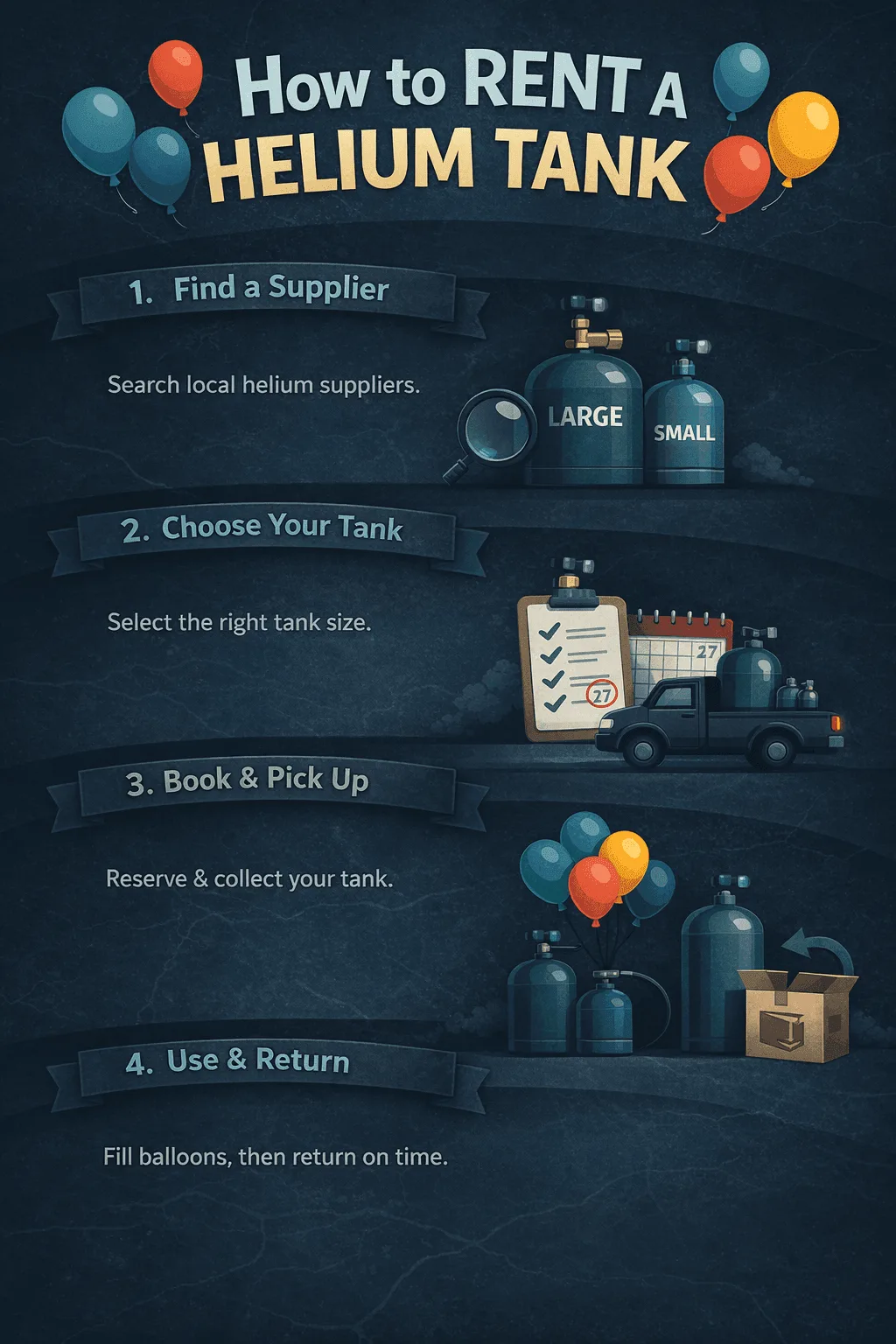
How helium rentals usually work
- Call suppliers before driving.
- Choose a tank size based on balloon count.
- Pay rental + helium + possible deposit.
- Return the tank on time or exchange it later.
Most rental problems come from choosing too small a tank, not asking what's included, or assuming helium behaves politely under pressure. It does not.
Still deciding between party kits and rental cylinders? Disposable vs refillable tanks
Quick answer: should you rent a helium tank?
Rental usually makes sense if…
- You need roughly 75+ balloons.
- You're decorating a gym, hall, school, church, or event venue.
- You want better value than disposable kits.
- You need helium for more than one small balloon bouquet.
Disposable kits may still work if…
- You only need around 20–30 balloons.
- The event is small and local.
- You want maximum simplicity.
- You don't want to deal with deposits or tank returns.
Where can you rent a helium tank?
Most helium rentals come from businesses already handling industrial gas or event equipment. The best supplier depends on your balloon count, timing, and whether you need delivery.
- Welding & industrial gas suppliers — best for larger cylinders, recurring use, and refill/exchange programs.
- Party rental companies — common for birthdays, graduations, schools, and weekend events.
- Balloon & event shops — some rent tanks, others only provide full-service decor.
- Regional gas distributors — may handle helium alongside CO₂, nitrogen, oxygen, and welding gases.
Big-box stores mostly focus on disposable kits. If you need a refillable cylinder, a welding supplier or rental company is usually the better route.
What to expect when renting a helium tank
Every supplier runs things a little differently, but most rentals involve the same basic pieces:
- Rental period — often a day, weekend, or full week.
- Tank deposit — refundable in many cases if returned correctly.
- Helium charge — based on cylinder size and fill.
- Regulator or inflator — included sometimes, rented separately other times.
- Pickup vs delivery — depends on supplier size and event type.
- Public vs account-only rentals — some industrial suppliers only rent to businesses.
Helium supply changes constantly around graduation season, holidays, and large events. Always call ahead before committing to a drive.
Questions to ask before you rent
A two-minute phone call can save you an hour of driving and a surprising amount of frustration.
- "Do you rent helium tanks to the public?"
- "What tank sizes are available today?"
- "Is this a refill or exchange setup?"
- "What does a weekend rental usually cost?"
- "Is the regulator included?"
- "Do you deliver?"
- "Do you refill customer-owned tanks?"
Simple phone script:
"Hi, I'm looking to rent a helium tank for balloons. Do you rent to the public, what tank sizes do you currently have available, and what does a weekend rental usually cost?"
Choosing the right helium tank size
Helium cylinders are usually measured in cubic feet (ft³). The correct size depends mostly on balloon count.
Small events
Around 20–40 balloons. Disposable kits or small rental cylinders may work.
Medium events
Around 75–150 balloons. 40–80 ft³ rental cylinders are common here.
Large installs
Balloon arches, gyms, schools, or hundreds of balloons. Larger industrial cylinders usually make more sense.
A standard 11" latex balloon uses roughly 0.48 ft³ of helium. A 40 ft³ tank typically fills about 80–85 balloons.
Need actual balloon count estimates? See the tank size guide
Ready to check suppliers?
Once you know roughly how many balloons you need, the next step is finding a supplier with helium available near you.
Helium tank safety basics
Helium cylinders are safe when handled correctly, but they are still high-pressure gas tanks.
- Transport upright whenever possible.
- Secure cylinders so they cannot roll or tip.
- Keep out of heat and direct sun.
- Close valves fully when not in use.
- Use proper regulators and inflators.
- Never inhale helium.
If you plan to move tanks regularly, see Helium accessories & safety gear.
Using Helium Locator to find rentals
- Use the live directory to search for refill, exchange, and rental suppliers.
- Browse state pages or city guides if you prefer location-based browsing.
- Check whether suppliers accept customer-owned tanks before driving.
- Call ahead for current availability, especially during graduation season and holidays.