DIY Helium Balloons & Tank Tips — Safe Party Setup Guide
Last updated: May 9, 2026
Planning to fill your own helium balloons at home? This guide covers what to buy, how to avoid wasting helium, basic cylinder safety, and when DIY stops making sense compared to renting a larger tank or hiring a decorator.
Quick jumps: Helium 101 Tank size guide Tank rental guide DIY vs decor Helium gear
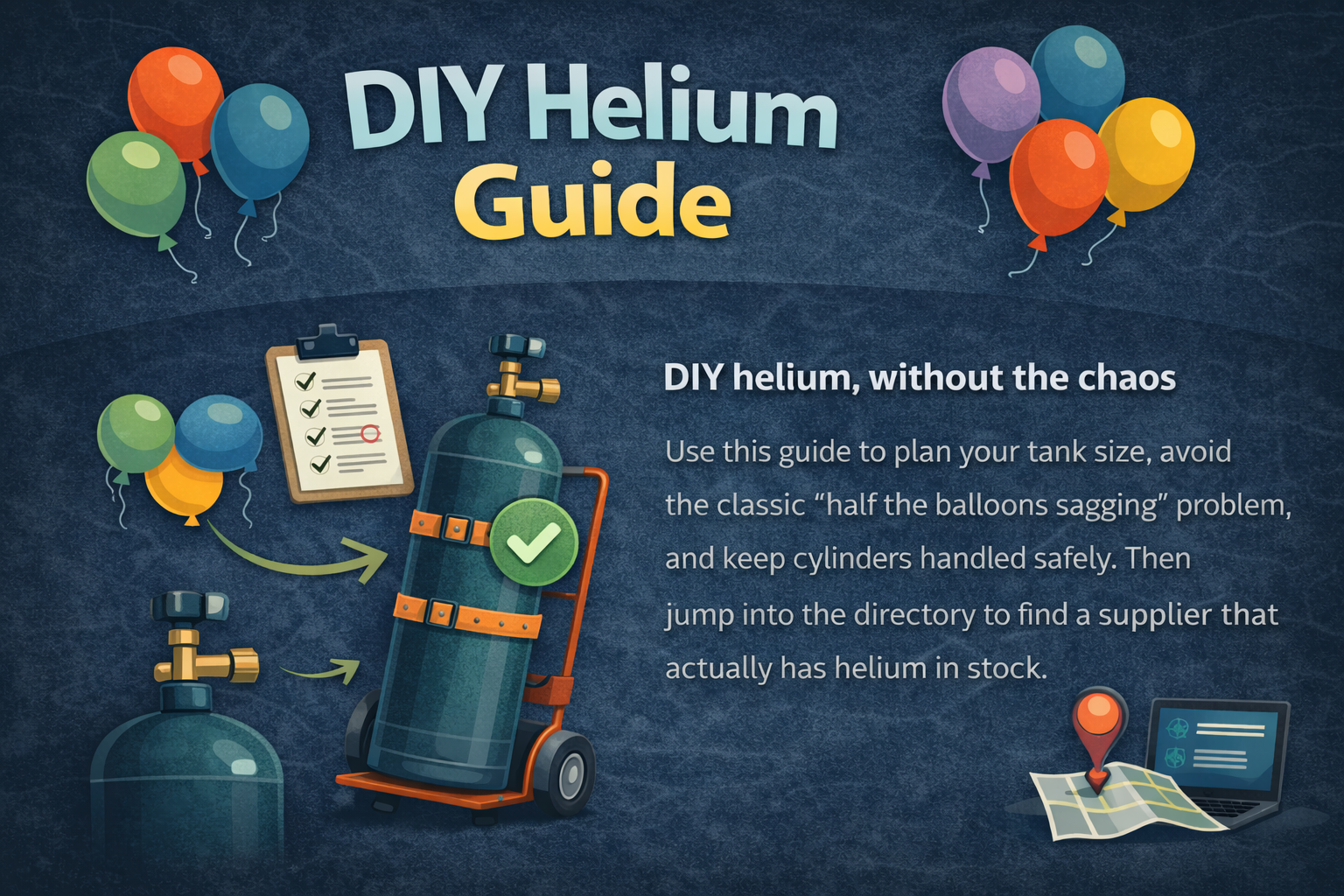
DIY helium, without the disaster arc
Use this guide to estimate your tank size, avoid the classic “half the balloons sagging” problem, and keep cylinders handled safely. Then use the directory to find suppliers that actually have helium available.
Should you DIY your helium setup?
DIY usually makes sense if…
- You’re doing a smaller event.
- You want to save money.
- You have setup time available.
- You’re comfortable handling balloons and tanks.
Rental cylinders usually make sense if…
- You need 75+ balloons.
- You’re decorating a gym or large room.
- You’re doing arches or columns.
- You don’t want disposable kits running out halfway through.
Hiring a decorator may make sense if…
- The event is high-pressure.
- You need large installs.
- Timing matters more than savings.
- You already have enough stress in your life.
Quick start: what you need
- Helium source: disposable kit or rental/exchange cylinder.
- Correct inflator: proper nozzle or regulator.
- Quality balloons: cheap latex leaks fast.
- String + weights: don’t release balloons outdoors.
- Transport basics: cylinders upright, secured, away from heat.
Full setup checklist: Helium accessories & safety gear
Need a refillable cylinder supplier? Use the directory filters to find refill, exchange, or rental suppliers near you.
How to inflate helium balloons properly
- Set up in a clean area: keep pets, kids, and chaos away from valves and tanks.
- Check your nozzle/regulator: don’t force fittings or “make it work.”
- Inflate slowly: latex stretches gradually, then suddenly explodes with disrespect.
- Tie carefully: poor knots leak helium faster than people realize.
- Weight balloons: outdoor helium balloons become litter with ambition if you don’t.
Using a refillable cylinder? Keep it upright and secured during transport and use.
Disposable kits vs rental cylinders
Disposable party kits
Best for small balloon counts and convenience. Usually more expensive per balloon and often disappointing for medium or large setups.
Most disposable kits are not designed to be refilled.
Rental / exchange cylinders
Better for volume, repeat use, arches, gyms, schools, and larger rooms. Usually the better value once balloon counts climb.
Exchange programs are often faster than true refill service.
Planning balloon counts? Use the tank size & balloon count guide.
Common mistakes that waste helium
- Cheap balloons: thin latex leaks quickly.
- Over-inflating: stretches latex too aggressively and increases leaks.
- Heat + sunlight: balloons expand and pop faster.
- Bad knots: small leaks destroy float time.
- Wrong regulator/nozzle: causes leaks and frustration.
- Underestimating balloon count: gyms and large rooms consume balloons aggressively.
If float time still seems terrible, double-check your balloon quality and compare against tank sizing estimates.
Helium safety basics
- Never inhale helium.
- Secure cylinders upright.
- Keep tanks away from heat.
- Use proper regulators and fittings.
- Transport tanks carefully.
Full gear & setup checklist: Helium gear & safety →
Where to go next
Still deciding?
Figure out whether DIY actually makes sense for your event.
Ready for details?
Lock in balloon counts, then find a supplier.
Find helium suppliers near you
Use the live Helium Locator tool to find refill, exchange, and rental suppliers.